


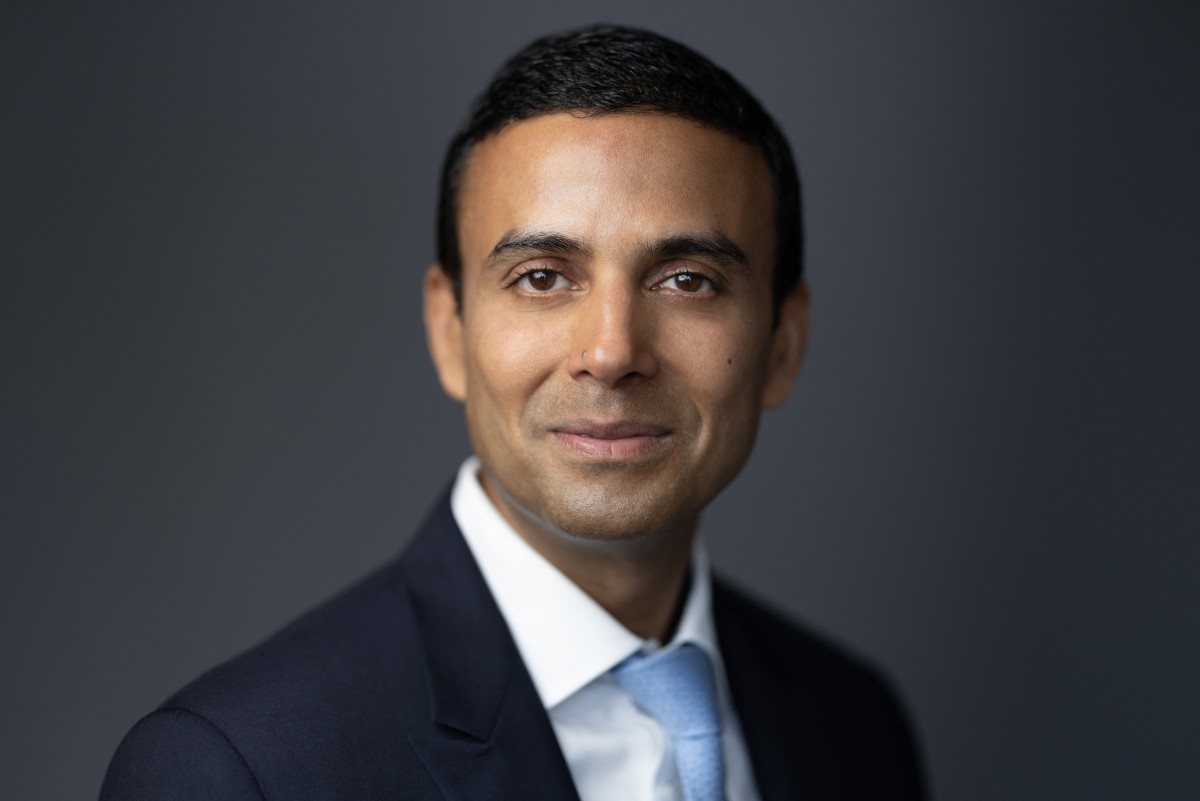
Indian entrepreneur Gagan Gupta has spent the past 15 years pursuing an ambitious goal: transforming Africa from a major exporter of raw materials into a continent capable of producing finished goods and building competitive industries.

Through his holding company Arise, Gupta has become one of the most prominent private-sector figures involved in Africa’s industrial development, leading projects focused on manufacturing, logistics, energy and mineral processing across several countries.
Gupta believes Africa is on the verge of a major economic transformation driven by its growing population and increasing demand for locally produced goods.
“The kind of industrialisation Africa will see, people can’t imagine. It will be massively changed in the next five to seven years, driven by population,” Gupta said during an interview in Paris.
He added that a wide range of products, from basic textiles to advanced industrial goods, could increasingly be manufactured within Africa rather than imported.
“Simple things from textiles to high-end things, all 1.4 billion people will need. And instead of being imported, all will get manufactured,” he said.
The 51-year-old businessman’s approach centres on developing industries around Africa’s existing resources, processing raw materials locally and creating jobs through large-scale industrial zones.
Gupta first became involved in Africa in the late 2000s when he moved to Gabon to lead the local operations of Singapore-based agrifood company Olam.
At the time, he had no French language skills and was entering a region where governments were increasingly exploring special economic zones (SEZs) as a way to attract investment and accelerate industrial growth.
SEZs offer companies incentives such as simplified customs procedures and tax benefits within designated areas, with the aim of encouraging manufacturing, exports and job creation.
In 2010, Gupta launched the Nkok Special Economic Zone in Gabon, a 1,000-hectare industrial project designed to process timber locally rather than exporting the country’s resources in raw form.
The idea behind the project became central to Gupta’s wider business strategy: identify key local resources, build processing industries around them, create skilled employment and export higher-value products.
Through Arise Integrated Industrial Platforms (Arise IIP), one of the entities within the wider pan-African group he founded, Gupta says approximately 100,000 people now work across various industrial zones in Africa.
One of the company’s major projects is in Benin, a country traditionally known for cotton production but now seeking to expand into textile manufacturing.
At the Glo-Djigbe Industrial Zone, facilities for spinning, weaving, dyeing and garment production have been developed, allowing cotton to be processed into finished clothing products.
The site exported its first garments in 2024 to French retailer Kiabi, followed by other international brands including US Polo.
Gupta is also developing textile projects in countries such as Togo, Nigeria and Kenya, arguing that Africa has significant potential to replace imported clothing with locally produced goods.
Sub-Saharan Africa currently imports more than $30 billion worth of textiles annually, according to industry estimates.
“If those billions were produced locally, you’re talking of direct jobs — up to 10 million people,” Gupta said.
Arise IIP has attracted significant investment to support its expansion. The company says it has secured nearly $2 billion in cumulative investment and announced a new $700 million fundraising round in 2025.
Saudi investment firm Vision Invest joined its shareholder base alongside institutions including the Africa Finance Corporation (AFC) and Gupta’s investment fund, Equitane.
Special economic zones have expanded rapidly across Africa in recent years, with more than 230 operating in 2025, according to research cited by the French Development Agency.
Supporters say the zones can help African economies diversify, strengthen manufacturing capacity and access international markets.
READ MORE: Russia Says 376 Ukrainian Drones Target Oil Facilities Overnight
However, economists have also raised concerns about their long-term effectiveness, including whether they generate enough local employment and whether tax incentives provided to investors reduce government revenues.
Julien Gourdon, an economist cited by AFP, said the success of special economic zones depends partly on strong relationships with governments and ensuring that benefits reach local communities.
Critics have also questioned the level of incentives and administrative advantages offered to some investors.
Arise has denied allegations of fraud or corruption linked to public contracts in countries including Gabon and Chad.
Gupta has defended the importance of government partnerships, arguing that large-scale investments naturally require cooperation with state authorities.
“If I were to come and say in France — or elsewhere — I want to invest a billion dollars, don’t you think I’ll be talking to the government? Why should it be any different in Africa?” he said.
Beyond manufacturing, Gupta is expanding into energy and mining.
Through companies linked to his wider business interests, he is involved in sectors including renewable energy, iron ore processing in Gabon, bauxite in Cameroon and gold projects in Mali.
He also said plans are underway to establish lithium-ion battery production facilities in Nigeria and Kenya, reducing Africa’s dependence on imported technology.
As he continues expanding across the continent, Gupta says Africa’s industrial transformation is only beginning.
“Our industrial transformation journey is just starting,” he said before travelling to China, where much of the world’s battery production currently takes place.