
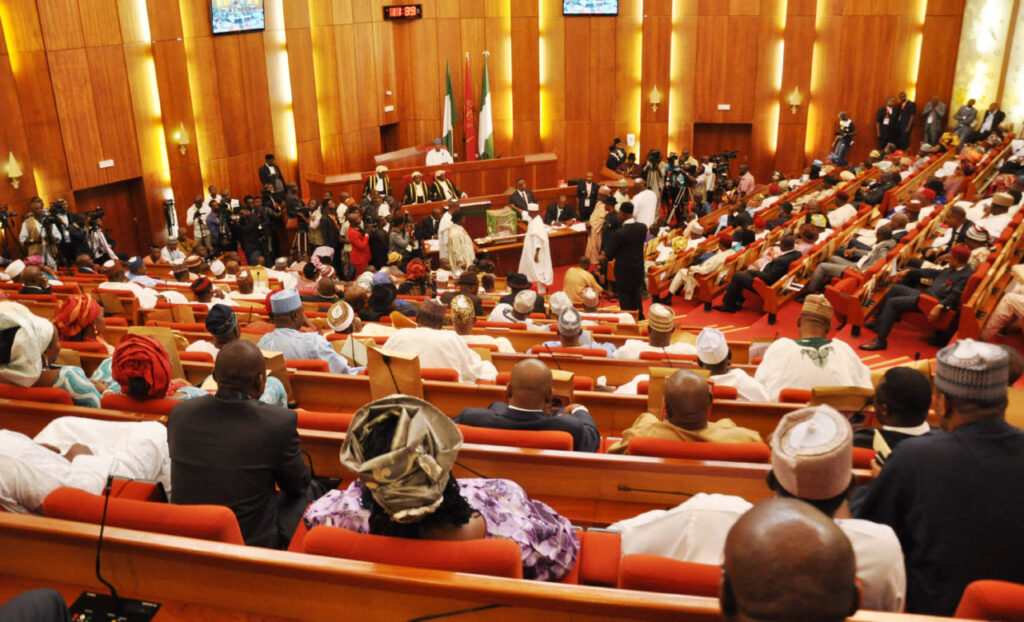
The Senate has scheduled a comprehensive investigation into Nigeria’s oil and gas sector, summoning the Nigerian National Petroleum Company Limited (NNPCL), the Central Bank of Nigeria (CBN), regulatory agencies, and major international and indigenous oil companies to explain issues arising from the Nigeria Extractive Industries Transparency Initiative (NEITI) audit reports covering 2021, 2022 and 2023.
The investigation, which begins on Monday, August 3, will be conducted by the Senate Public Accounts Committee, chaired by Senator Ibrahim Hassan Dankwambo, as part of the National Assembly’s oversight of one of Nigeria’s most strategic revenue-generating sectors.
According to a public notice issued by the committee, the hearings will examine financial and operational issues highlighted in the NEITI audit reports, including revenue collections, remittances, statutory obligations and compliance with laws governing the extractive industry.
The committee stated that its powers to conduct the investigation are derived from Sections 88, 89 and 85(5) of the 1999 Constitution (as amended) and Order 95(5)(d) of the Senate Standing Orders, 2026.
The Senate said the NEITI audit reports submitted to the National Assembly contain detailed records of financial transactions and operational activities involving government agencies, regulatory institutions, state-owned enterprises and oil companies.
Lawmakers will examine the level of compliance with the NEITI Act, the Fiscal Responsibility Act, financial regulations and other statutory provisions governing Nigeria’s oil and gas industry.
The committee also intends to scrutinise issues relating to revenue remittances to the Federation Account and compliance with other financial obligations identified in the audit reports.
The first phase of the public hearing will feature appearances by:
- Nigeria Extractive Industries Transparency Initiative (NEITI)
- Nigerian Upstream Petroleum Regulatory Commission (NUPRC)
- Central Bank of Nigeria (CBN)
- Niger Delta Development Commission (NDDC)
- Office of the National Security Adviser (ONSA)
- Nigerian Investment Promotion Commission (NIPC)
- Nigerian Midstream and Downstream Petroleum Regulatory Authority (NMDPRA)
- Revenue Mobilisation Allocation and Fiscal Commission (RMAFC)
- Nigerian National Petroleum Company Limited (NNPCL)
- Joint Development Authority
- Ministry of National Planning
- Nigeria Revenue Service
- Office of the Accountant-General of the Federation
- Office of the Auditor-General for the Federation
- Federal Ministry of Petroleum Resources
The committee has also fixed August 10 for additional hearings involving the Office of the Surveyor-General of the Federation, the Federation Account Allocation Committee (FAAC) and the Federal Ministry of Finance, before commencing sessions with major oil-producing companies.
Among the companies invited to appear before the committee are:
- Seplat Energy
- Aradel Energy
- Famfa Oil
- TotalEnergies EP Nigeria
- Oando
- Chevron Nigeria
- CNOOC Exploration and Production Nigeria Limited
- Conoil Producing
- Mobil Producing Nigeria Unlimited
- Esso Exploration and Production Nigeria
- Shell Nigeria Exploration and Production Company
- Aiteo Eastern E&P
- Midwestern Oil and Gas
- Pan Ocean
- ND Western
- Platform Petroleum
- Neconde Energy
The Senate directed all organisations to be represented by their chief accounting officers and relevant technical officials capable of responding to questions arising from the audit reports.
READ MORE: NPA Eyes Cargo Growth as BUA Invests $85m in Port Expansion
The invited organisations were also instructed to appear with all relevant documents, warning that requests for adjournments or rescheduling would only be granted under exceptional circumstances and with prior approval.
The investigation forms part of the Senate’s broader efforts to strengthen transparency, accountability and revenue management within Nigeria’s extractive industry.
Lawmakers are expected to rely on the NEITI audit reports to assess compliance with statutory financial obligations, examine outstanding revenue remittances and determine whether existing accountability frameworks are being effectively implemented across the sector.
The outcome of the hearings could influence future legislative actions aimed at improving governance, transparency and financial accountability in Nigeria’s oil and gas industry.