


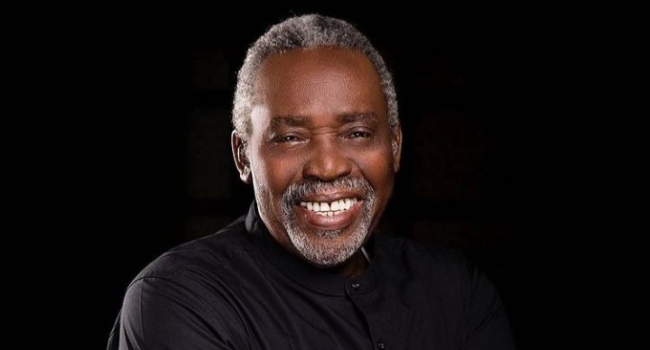
Veteran Nigerian actor and elder statesman, Oludotun Baiyewu Jacobs, popularly known as Olu Jacobs, has died at the age of 84.

His death was announced by his son, Olusoji Jacobs, on Instagram on Wednesday.
Jacobs was one of the most recognisable figures in Nigerian theatre, television and film, building a career that spanned more than five decades.
From the British stage and television to international cinema and the rise of Nollywood, he established himself as an actor whose distinctive voice, commanding presence and versatility made him a household name.
From Kano Childhood To The Stage
Olu Jacobs was born on July 11, 1942, in Kano, although his family had roots in the Egba Alake community of Abeokuta, Ogun State.
He grew up in Kano, where his interest in performance developed through school drama, debating activities and church programmes.
His decision to pursue acting professionally was strengthened after he watched a performance by renowned Nigerian theatre practitioner Hubert Ogunde.
The experience reportedly left a lasting impression on the young Jacobs and encouraged him to pursue a career in the performing arts.
How Britain Shaped His Acting Career
Jacobs later moved to the United Kingdom, where he trained at the Royal Academy of Dramatic Art in London.
His time at RADA provided formal training that helped shape the theatrical discipline that later became a defining feature of his performances.
After completing his training, he worked with repertoire theatres in Britain and appeared in a number of television productions.
His British television credits during the 1970s included The Goodies, Till Death Us Do Part, The Professionals, The Tomorrow People and Barlow at Large.
His international film appearances also included The Dogs of War in 1980, Baby: Secret of the Lost Legend in 1985 and Roman Polanski’s Pirates in 1986.
The Rise Of A Nollywood Icon
After his years working abroad, Jacobs returned to Nigeria and became an important figure in the country’s expanding entertainment industry.
He worked across theatre, television and film and eventually appeared in hundreds of productions.
Within Nollywood, he became especially associated with roles involving authority and leadership.
Kings, chiefs, traditional rulers and family patriarchs became some of his most memorable characters, with his deep voice and imposing screen presence adding weight to those performances.
His career also placed him among the generation of performers who helped establish the Nigerian film industry as a major force in African entertainment.
Awards That Marked His Contribution
Jacobs received several honours during his long career.
In 2007, he won the Africa Movie Academy Award for Best Actor in a Leading Role.
He later received the Industry Merit Award for outstanding achievement in acting at the 2013 Africa Magic Viewers’ Choice Awards.
In 2016, he was presented with the MAA Lifetime Achievement Award.
His contribution also earned national recognition when the Federal Government conferred on him the Member of the Order of the Federal Republic (MFR) honour in 2011.
Olu Jacobs And Joke Silva
Beyond the screen, Jacobs’ life was closely connected to fellow veteran actress Joke Silva.
The two built a marriage and professional partnership that became one of the best-known relationships in Nigeria’s entertainment industry.
Together, they founded the Lufodo Group, which has been involved in film production, distribution and performing arts education.
They also established the Lufodo Academy of Performing Arts, helping train aspiring performers and contribute to the development of Nigeria’s creative sector.
His Final Years Away From The Spotlight
Jacobs spent much of his later life away from public appearances as his health declined.
Joke Silva had previously spoken publicly about her husband’s health, disclosing that he was living with dementia with Lewy bodies, a degenerative condition.
His health also became the subject of repeated false reports about his death.
In June 2024, Silva dismissed another report of his death, saying that he was alive and doing well at the time. Earlier death rumours had similarly been rejected by the family.
Jacobs subsequently maintained a relatively private life, even as colleagues, fans and fellow actors continued to recognise his contribution to Nigerian entertainment.
A Legacy Beyond The Screen
Olu Jacobs’ influence extended beyond the characters he portrayed.
His career bridged different eras of Nigerian entertainment, connecting traditional theatre with modern film and television while drawing on professional experience gained in Britain.
He also contributed through production and performing arts education, helping create opportunities for emerging talents.
Alongside fellow veterans such as Pete Edochie, Jacobs became associated with a generation of actors whose work helped give Nigerian cinema its distinctive identity.
For generations of viewers, his performances were defined by authority, dignity, wisdom and a powerful theatrical presence.
His awards, international credits, screen performances, mentorship and contribution to arts education have secured his place in the history of Nigerian entertainment.
Olu Jacobs’ Enduring Place In Nigerian Cinema
The death of Olu Jacobs marks the passing of one of the most recognisable figures from Nigeria’s acting tradition.
His career crossed national and international boundaries, while his work in theatre, television, film and arts education influenced the industry in different ways.
READ MORE: The Biggest Travel Trends Shaping 2026: Why Travellers Are Choosing Experiences Over Luxury
He leaves behind his wife, Joke Silva, his family, colleagues and generations of performers and filmmakers who drew inspiration from his work.
For more than five decades, Olu Jacobs was not simply an actor on Nigerian screens. He became part of the story of how Nigerian theatre and cinema evolved into the entertainment industry known around the world today.
Olu Jacobs’ career represents one of the longest and most influential journeys in Nigerian acting. From professional training in Britain to major roles in Nollywood, his work crossed generations and helped connect Nigerian theatre with modern cinema.
His contribution will be remembered through the productions he featured in, the performers he influenced and the institutions he helped build with Joke Silva.