


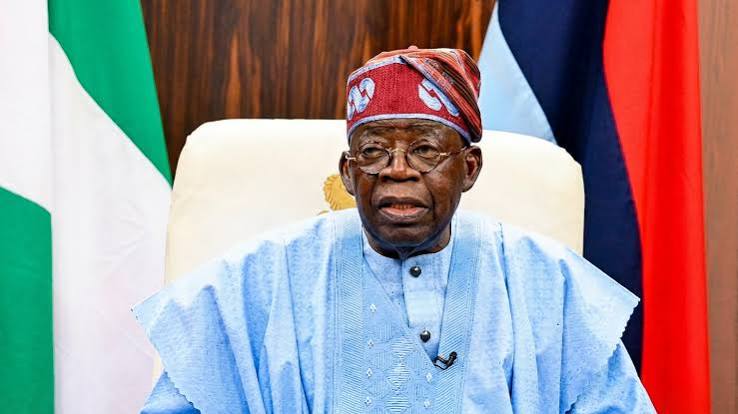
President Bola Tinubu has declared that Nigeria will no longer rely on exporting raw cocoa beans while importing finished chocolate products, insisting that value addition must become the foundation of the country’s industrial strategy.

The President made the declaration on Tuesday while opening the 2026 Cocoa Value Addition Summit in Abuja, themed “From Bean to Brand.” He said Nigeria and other African cocoa-producing nations must capture a larger share of the global chocolate industry by processing more of their cocoa locally.
Represented by the Minister of Agriculture and Food Security, Senator Abubakar Kyari, President Tinubu noted that although Africa produces about 70 per cent of the world’s cocoa, it retains only a small fraction of the wealth generated by the global chocolate industry, valued between $130 billion and $165 billion.
He described the imbalance as unacceptable, saying Nigeria is determined to transition from exporting raw agricultural commodities to manufacturing high-value finished products.
According to the President, more than 300,000 farming families cultivate cocoa across over 1.4 million hectares in Nigeria, contributing approximately six to seven per cent of global cocoa production.
Tinubu added that rising international cocoa prices, which climbed above $10,000 per tonne, generated more than ₦3 trillion for Nigeria and accounted for nearly 25 per cent of the country’s non-oil exports. However, he observed that the bulk of these earnings still comes from the export of raw cocoa beans.
“We export the bean at one price and import it back as a chocolate bar at 20 times that price. That is not trade. That is tribute, and the era of tribute is over,” the President said.
He explained that under the Renewed Hope Agenda, value addition now occupies a central position in Nigeria’s industrial policy, with the government prioritising local manufacturing over raw commodity exports.
The President highlighted ongoing investments in the cocoa industry, including the establishment of a 70,000-tonne cocoa processing facility in Sagamu, while revealing that Nigeria’s total cocoa grinding capacity has now surpassed 120,000 tonnes annually.
He also announced the rollout of one million improved cocoa seedlings by the Cocoa Research Institute of Nigeria (CRIN), saying the disease-resistant and higher-yielding varieties would ensure sustainable supplies for domestic processors.
Tinubu further disclosed that the Bank of Industry (BoI) is prepared to finance bankable cocoa processing projects, with several investment agreements expected to emerge from the summit.
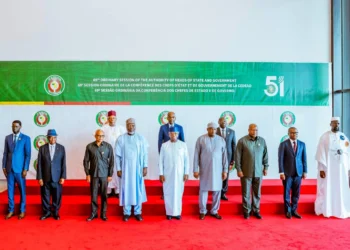
A major highlight of the summit was the signing of the framework establishing the Cocoa Value Addition Alliance, also known as the Abuja Declaration, by Nigeria, Ghana, Côte d’Ivoire and Cameroon.
The four countries, which collectively account for nearly three-quarters of global cocoa production, pledged to collaborate on sustainability, traceability, value addition and global cocoa trade negotiations.
The Federal Government, cocoa-producing states, farmers, processors, financiers and other stakeholders also signed Nigeria’s National Compact on Cocoa Value Addition under the Cocoa Value Addition Accord.
Minister of State for Industry, Trade and Investment, Senator John Owan Enoh, described the current structure of the global cocoa trade as unfair, arguing that while African farmers bear most of the production risks, the bulk of profits are earned outside the continent.
Drawing from his experience as a cocoa farmer, Enoh said the summit marked the beginning of a new era through the introduction of dedicated financing windows, a national cocoa traceability system and stronger regional collaboration.
He also urged African countries to engage collectively with emerging international regulations such as the European Union Deforestation Regulation, insisting that standards affecting African producers should not be developed without Africa’s participation.
According to the minister, the newly launched Cocoa Value Addition Accord will contain measurable targets, timelines and accountability mechanisms to ensure implementation.
He pledged that the initiative would not become another policy document left unimplemented, stressing that annual progress would be monitored through a Delivery Council under his leadership.
Enoh also announced that at least 40 per cent of opportunities created under the accord would be reserved for young people and women.
Managing Director and Chief Executive Officer of the Bank of Industry, Dr. Olasupo Olusi, said access to long-term financing would determine whether Nigeria successfully transforms cocoa from a raw commodity into an industrial value chain.
He disclosed that BoI has already disbursed over ₦164 billion to more than 3,500 agro-processing businesses in 2025 and secured a €60 million European Investment Bank facility to support cocoa sector development.
READ MORE: FG Inaugurates Advisory Committee To Drive Economic Reforms
Olusi said the bank would provide financing for cocoa processing plants, packaging facilities, laboratories and digital traceability infrastructure, while also supporting warehouse receipt systems, export financing and seasonal working capital for processors.
He added that Nigeria should strategically focus on cocoa grinding, cocoa powder and industrial ingredients before expanding into globally recognised chocolate brands.
Chief Executive of the Ghana Cocoa Board (COCOBOD), Dr. Ransford Abbey, urged Nigeria and Cameroon to join the existing Ghana-Côte d’Ivoire cocoa partnership to strengthen Africa’s bargaining power in the global cocoa market.
He lamented that although the four countries produce about 75 per cent of global cocoa, they earn less than 10 per cent of the wealth generated by the international chocolate industry.
Abbey said Africa must move beyond exporting raw cocoa beans by investing in processing, branding and increasing domestic consumption, adding that the continent seeks “equity, not charity” in the global cocoa value chain.