
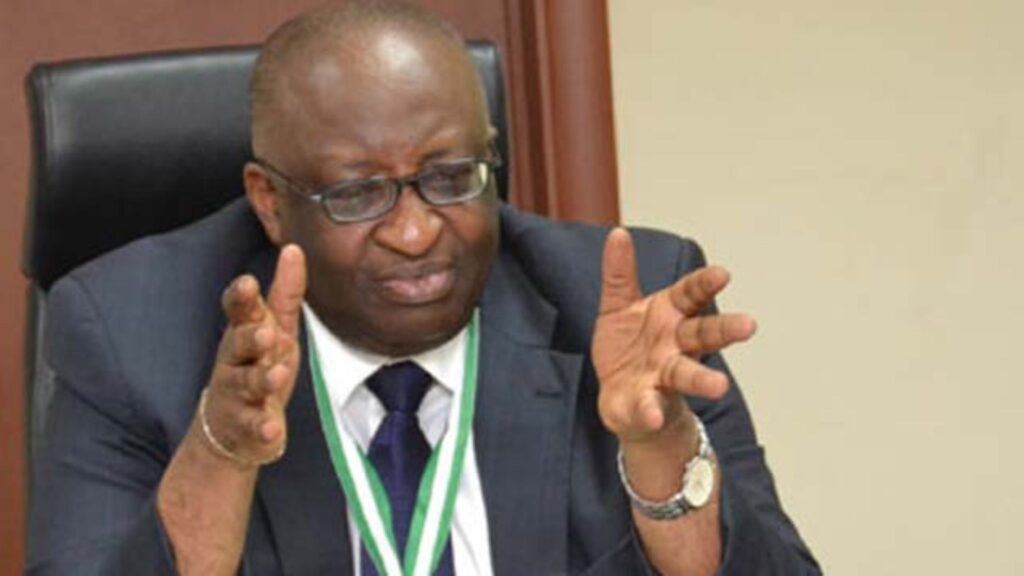
Economist and former Director-General of the West African Institute for Financial and Economic Management (WAIFEM), Professor Akpan Ekpo, has called for sweeping reforms to Nigeria’s budget process, describing the current system as being “in total disarray” and lacking transparency and accountability.
Speaking during an interview on ARISE News on Tuesday, Ekpo said the country’s budgeting framework has steadily deteriorated over the years despite its critical role in national development and public financial management.
“The budget process is in total disarray and that has got to end,” he said.
Ekpo argued that persistent weaknesses in Nigeria’s budgeting system are closely linked to corruption and inadequate transparency in the management of public finances.
“I think it’s part and parcel of the endemic corruption and non-transparency,” he stated.
Drawing from his experience, the economist noted that he had previously participated in the federal budget process but believes the system has become progressively worse.
“I had the privilege of being part of the budget process and it just keeps getting worse,” he said.
He called for a comprehensive national conversation involving policymakers, economists and other stakeholders to reform the country’s budgeting framework.
“I think we need a serious round table on this issue of the budget because it’s a big thing for me,” Ekpo added.
Ekpo also criticised the quality of budget documentation, saying a review of expenditure details across Ministries, Departments and Agencies (MDAs) raises concerns about how public funds are allocated.
“When you look at the spreadsheets for each of the MDAs, you get embarrassed,” he remarked.
According to him, Nigeria is simultaneously facing revenue generation challenges and rising government expenditure, with the cost of governance remaining unsustainably high.
“I don’t think they’ve met the revenue target. There’s a revenue challenge but there’s also an expenditure challenge. The cost of governance is very high,” he said.
The economist questioned whether increasing government revenues are translating into improved living conditions for ordinary Nigerians.
READ MORE: ADC Blasts APC as Atiku Faults Tinubu’s Economic Policies
He argued that despite rising public revenues, many citizens still lack access to basic social services and essential infrastructure.
“Definitely, what is the money being used for? Because as we speak, 80 percent of Nigerians lack the basic needs of life,” Ekpo said.
“So where is the money going? That’s a very important question.”
Ekpo urged Nigerians to demand greater accountability from governments at the federal, state and local levels, insisting that public spending should produce measurable improvements in education, healthcare, electricity supply and other essential services.
“We need to ask ourselves where the money is going. We need to get answers,” he said.
He maintained that stronger public oversight of government finances would help ensure that increasing revenues are translated into better infrastructure, improved public services and higher living standards for citizens.