
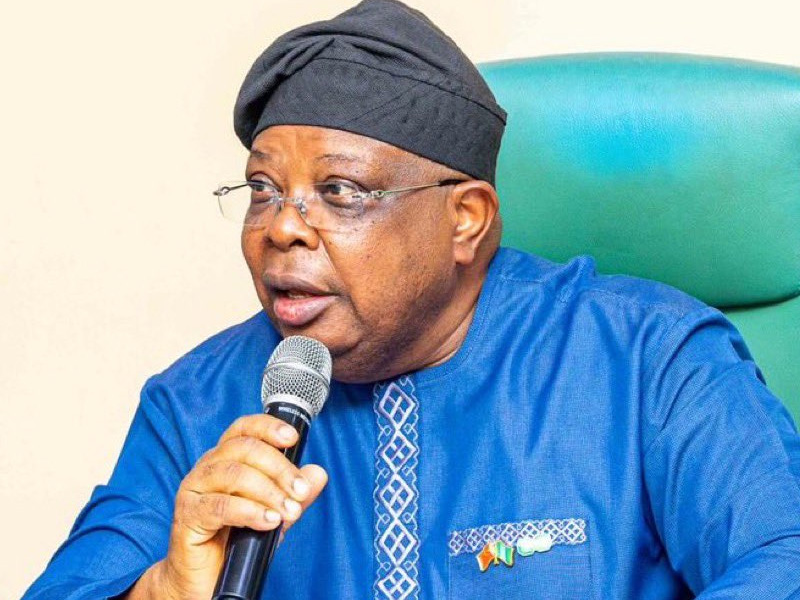
The Federal Government has dismissed reports suggesting it will immediately remove electricity subsidies or increase electricity tariffs, assuring Nigerians that its current priority is to improve power supply rather than impose higher costs on consumers.
The clarification followed remarks by the Minister of Power, Joseph Tegbe, during a national media roundtable on “Resetting Nigeria’s Power Sector” in Lagos, where he spoke about the administration’s long-term strategy to address the power sector’s liquidity crisis. Although the minister said the government intends to end the subsidy regime in the future, he stressed that there is no immediate policy to increase electricity tariffs or withdraw subsidies.
“There is no policy by this administration to increase electricity tariff beyond the current rate. If anybody is telling you we want to increase tariff or put everybody in Band A, there is nothing like that in the immediate term,” Tegbe said.
According to the minister, the government’s immediate focus is to improve electricity supply, expand nationwide metering, strengthen the transmission network and stabilise the national grid before considering broader market reforms. He also assured Nigerians that vulnerable consumers would continue to receive protection while the sector moves toward financial sustainability.
Tegbe disclosed that Nigeria’s electricity sector is battling a liquidity crisis, with about ₦3.3 trillion in legacy debt owed to electricity generation companies and gas suppliers. To address this challenge, the Federal Government is advancing a Power Sector Bond Initiative aimed at clearing outstanding obligations and preventing future debt accumulation.
Currently, the government subsidises electricity for customers in Bands B, C, D and E, while Band A customers pay closer to cost-reflective tariffs. The subsidy for non-Band A consumers is estimated at about ₦200 billion monthly, while power generation companies have said outstanding debts owed to operators now exceed ₦7 trillion.
The minister said the Tinubu administration’s reform agenda is designed to make electricity a driver of economic growth through improved infrastructure, stronger regulation and increased investment.
Among the immediate interventions announced are:
- Engagement of 5,000 youths under the Power Force programme for nationwide meter installation.
- Expansion of the Presidential Metering Initiative to eliminate estimated billing.
- A technical audit of the national transmission network.
- A Super Grid Programme to strengthen transmission infrastructure.
- Harmonisation of federal and state electricity regulations.
- Establishment of the Generating Asset Management Company (GAMCO) and Renewable Assets Management Company (RAMCO) to unlock financing for power assets.
Tegbe also revealed that Nigeria has consistently generated about 5,000 megawatts of electricity over the past two weeks, saying many consumers are now enjoying up to 16 hours of electricity daily. He expressed optimism that, within the next two to three years, Nigerians could experience electricity supply lasting up to 22 to 24 hours daily if ongoing reforms are successfully implemented.
READ MORE: FG Adopts Kaduna Model to Reduce Out-of-School Children
The minister assured Nigerians that noticeable improvements in electricity supply should become evident within the next six months, emphasising that the success of the reforms will depend on effective implementation rather than policy announcements alone.