
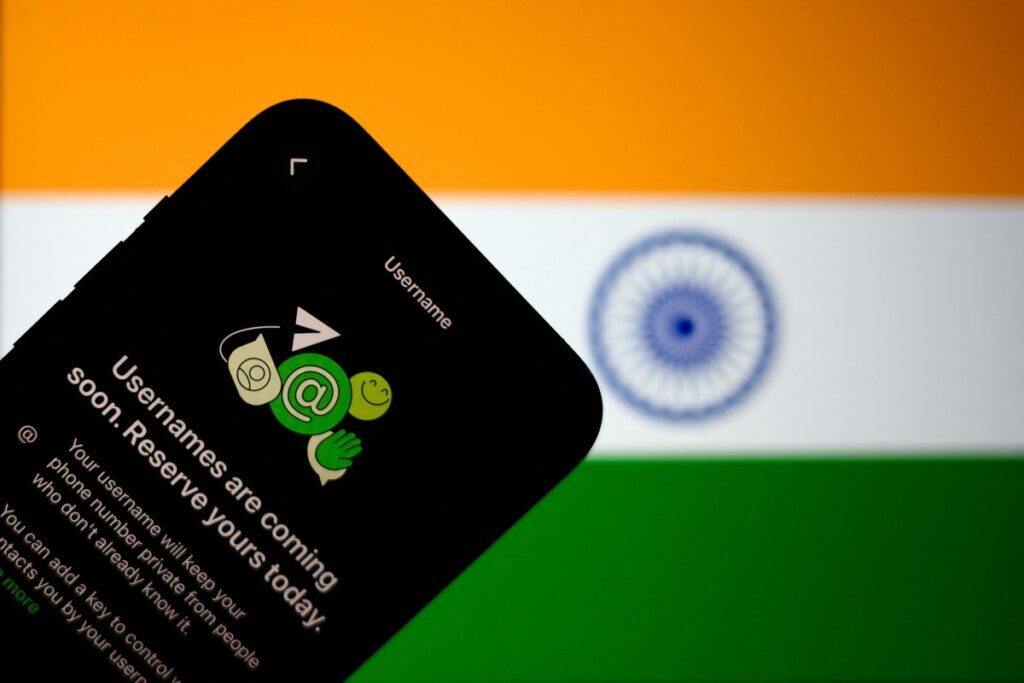
India has asked Meta to delay the rollout of the WhatsApp username feature in the country, citing concerns that the new tool could fuel online fraud, phishing attacks and identity impersonation at a time when cybercrime is rising sharply across the world’s most populous nation.
The request comes just days after WhatsApp announced plans to allow users around the world to connect using unique usernames instead of sharing their phone numbers, a feature the company says is intended to strengthen user privacy.
However, Indian authorities fear the change could create new opportunities for cybercriminals to deceive users, particularly those with limited digital literacy.
Government Raises Fraud and Impersonation Concerns
According to reports by the Indian Express, India’s Ministry of Electronics and Information Technology has formally written to Meta asking the company to pause the launch of the feature until further consultations are completed.
Officials believe the introduction of usernames could make it easier for fraudsters to impersonate trusted individuals or organisations and target unsuspecting users.
“There is a possibility that bad actors may claim usernames… and message other users while pretending to be someone they are not,” a senior government official was quoted as saying.
The official added that many internet users who are not technologically aware may struggle to distinguish between genuine and fake accounts.
Authorities warned that the feature could contribute to a rise in phishing attempts, online financial fraud, so-called digital arrest scams and other forms of cybercrime that have become increasingly common in India.
WhatsApp Defends the New Feature
WhatsApp announced on Monday that users would soon be able to communicate using unique usernames rather than sharing their mobile phone numbers.
The company says the feature is designed to improve privacy by allowing users to connect without exposing their personal phone numbers.
Meta noted that the feature has not yet been launched in India, despite its global announcement.
The company also said it has built safeguards into the system to reduce the risk of impersonation.
“To protect against impersonation, we’ve held the highest-profile names… so they can only ever be claimed by their legitimate owners,” Meta said in a statement.
The company stressed that users will still need a valid phone number to register and use WhatsApp, adding that multiple layers of anti-scam protections have been incorporated into the username system.
India Is WhatsApp’s Largest Market
India is WhatsApp’s biggest market, with more than 500 million users, making any product changes particularly significant for both the company and regulators.
The platform is widely used for personal communication, business messaging, customer service and digital commerce across the country.
Given its enormous user base, Indian authorities have become increasingly active in scrutinising new digital features that could affect online safety or data security.
The latest concerns come only weeks after Meta appointed Kunal Shah, a prominent Indian fintech entrepreneur, as the new head of WhatsApp, signalling the company’s growing focus on the Indian market.
Rising Cybercrime Drives Regulatory Action
The government’s request reflects broader concerns about the rapid growth of cybercrime as India continues its digital transformation.
Millions of new internet users have come online over the past decade, but digital literacy and awareness of online security risks have not always kept pace.
Government figures show that Indians lost nearly $3 billion to cyber fraud in 2025, representing an almost 40-fold increase compared with losses recorded in 2021.
Authorities say criminals increasingly rely on sophisticated phishing campaigns, fake customer service accounts, investment scams, identity theft and fraudulent law enforcement impersonation schemes to target victims.
The proposed username feature has therefore raised concerns that scammers could register usernames closely resembling those of legitimate individuals, businesses or public institutions, making fraudulent messages appear more credible.
READ ALSO: TikTok Settles Teen Mental Health Lawsuit Before Trial
Similar Features Already Exist Elsewhere
Although WhatsApp’s username system is new, similar functionality has long existed on other messaging platforms.
For example, WeChat, operated by Chinese technology company Tencent, allows users to communicate through usernames rather than relying solely on phone numbers.
Supporters of username-based messaging argue that it improves user privacy by reducing the need to share personal contact details.
However, cybersecurity experts generally agree that such systems require strong identity verification, effective account recovery processes and robust monitoring to minimise the risk of impersonation.
Consultation Continues
Meta has not indicated whether it will comply with India’s request to postpone the rollout, but the company confirmed that the feature remains unavailable in the country while discussions continue.
The outcome of those consultations could influence how WhatsApp introduces the feature in one of its most important global markets and may shape future regulations governing messaging platforms in India.
As cybercrime continues to rise, Indian regulators appear determined to ensure that new digital tools include sufficient safeguards before they become available to hundreds of millions of users.