



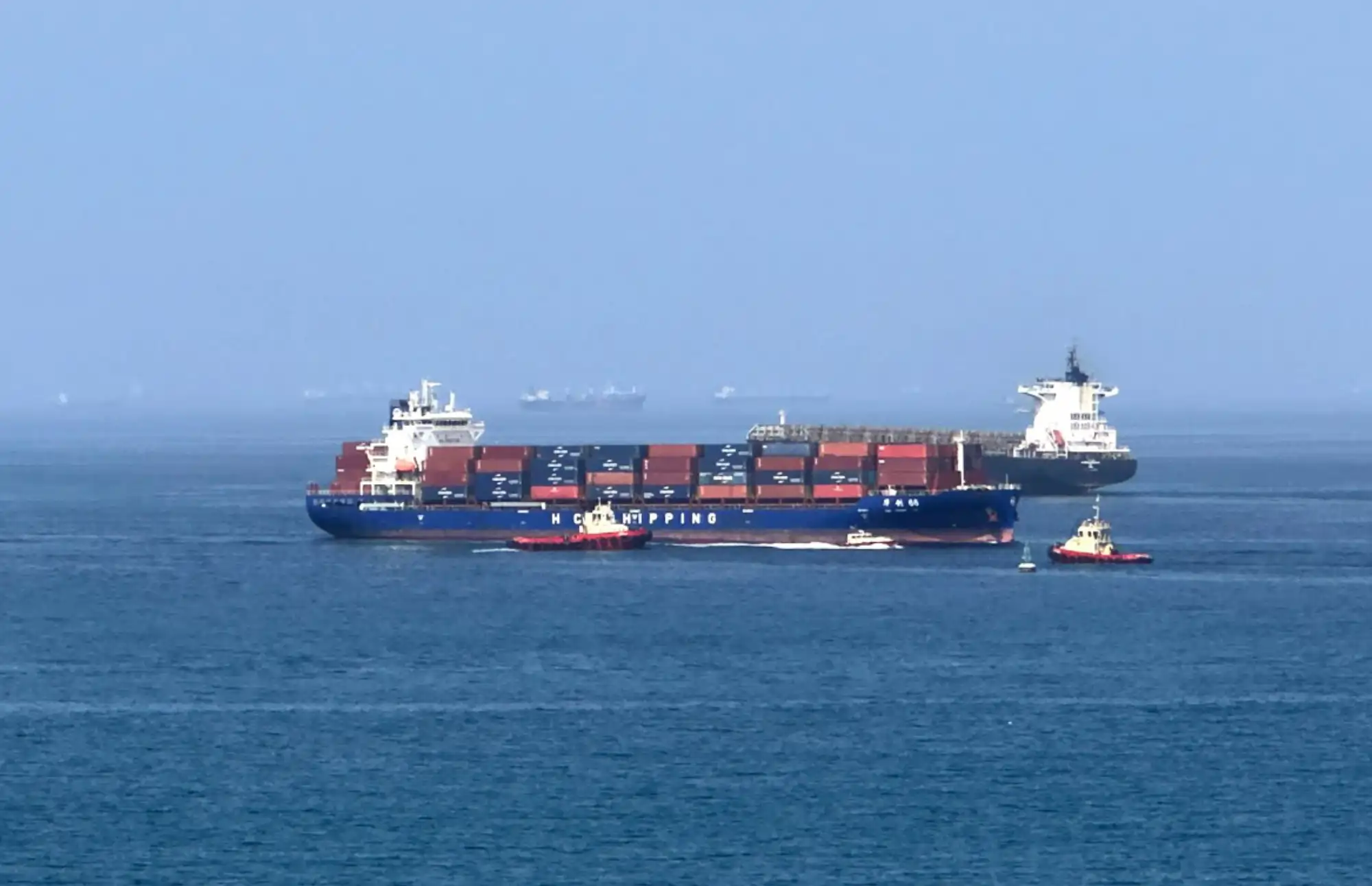
Iran says it has held its first official meeting with Oman on the future management of the Strait of Hormuz, a strategically vital shipping route, following the preliminary agreement signed between Tehran and Washington aimed at ending the recent Middle East conflict.

The talks mark the beginning of discussions on one of the most contentious issues emerging from the ceasefire framework between Iran and the United States, with both Iran and Oman seeking to define how the narrow waterway will be administered in the months ahead.
Iranian Deputy Foreign Minister Kazem Gharibabadi announced the development on Monday, saying the meeting took place during a visit to the Omani capital, Muscat.
“During a trip to Muscat, the first meeting of the Joint Hormuz Committee was held,” Gharibabadi wrote on X.
“While reviewing the current issues related to the strait, we exchanged views on the future management,” he added.
He did not specify when the meeting took place.
Strategic Importance of the Strait of Hormuz
The Strait of Hormuz is one of the world’s most important maritime chokepoints, linking the Persian Gulf with the Gulf of Oman and the Arabian Sea.
At its narrowest point, the waterway is only about 30 kilometres (18 miles) wide and serves as the primary export route for crude oil and liquefied natural gas from Gulf producers to international markets.
Because a significant share of global energy supplies passes through the strait, any disruption can have immediate consequences for international oil prices, shipping costs and global trade.
During the recent conflict, Iran temporarily blockaded the strait, raising fears of severe disruptions to global energy supplies.
Management of the Waterway Remains Unresolved
The future administration of the Strait of Hormuz has emerged as one of the most sensitive issues in negotiations between Tehran and Washington.
Iran has proposed introducing maritime service charges that did not exist before the conflict, arguing that additional costs associated with managing and securing the waterway should be shared by commercial users.
The United States, however, opposes the proposal, maintaining that the Strait of Hormuz is an international waterway where ships should enjoy unrestricted passage without additional fees.
The disagreement has become one of the principal unresolved issues following the preliminary peace agreement.
Oman Signals Mixed Position
Oman, which shares sovereignty over the Strait of Hormuz with Iran and has frequently served as a mediator in regional disputes, has sent mixed signals regarding the future of the shipping lane.
Last week, following high-level Iranian visits to Muscat, the two countries issued a joint statement confirming they were examining the costs associated with managing the strait in the future.
However, days later, Omani authorities clarified that there were no immediate plans to introduce passage fees.
The Sultanate also announced the creation of a temporary maritime corridor closer to its coastline, saying the arrangement had been coordinated with the United Nations to ensure safe navigation.
Iran rejected that interpretation, insisting that the only authorised shipping corridor remained the route along its own coastline.
Tehran Warns Against Alternative Shipping Routes
Iranian Foreign Minister Abbas Araghchi warned on Sunday that any attempt to divert international shipping through alternative maritime routes without Tehran’s approval could increase regional tensions.
His comments followed a fresh escalation in hostilities during which Iran struck a commercial vessel transiting the Strait of Hormuz.
The United States responded by carrying out military strikes against Iranian coastal positions, further heightening concerns over freedom of navigation in one of the world’s busiest energy corridors.
Although active fighting has eased since the signing of the preliminary agreement, officials acknowledge that the security situation around the strait remains fragile.
Framework for Future Cooperation
Under the memorandum of understanding reached between Tehran and Washington, Iran agreed to begin formal discussions with Oman regarding the future administration of the Strait of Hormuz.
The agreement states that Iran will work with the Sultanate of Oman, while consulting other Persian Gulf coastal states, to determine future maritime services and governance arrangements in accordance with international law and the sovereign rights of coastal nations.
The framework also provides that commercial passage through the strait will remain toll-free for 60 days following the signing of the agreement.
However, the memorandum does not specify what arrangements will apply after that temporary period expires, leaving uncertainty over whether shipping companies could eventually face new fees or operational requirements.
Read More: Oil Prices Crash to Pre-War Levels as US-Iran Talks Advance
Global Attention on Hormuz
The outcome of the Iran-Oman negotiations is being closely watched by governments, shipping companies and energy markets around the world.
The Strait of Hormuz remains a critical artery for global oil and gas exports, and any changes to its administration could have significant implications for maritime security, international trade and energy prices.
While the first meeting of the Joint Hormuz Committee represents an important step in implementing the broader peace agreement, key questions—including the future governance of the waterway, potential service charges and long-term navigation arrangements—remain unresolved.
Further negotiations between Iran, Oman, the United States and other Gulf states are expected in the coming weeks as efforts continue to establish a lasting framework for one of the world’s most strategically important maritime passages.