
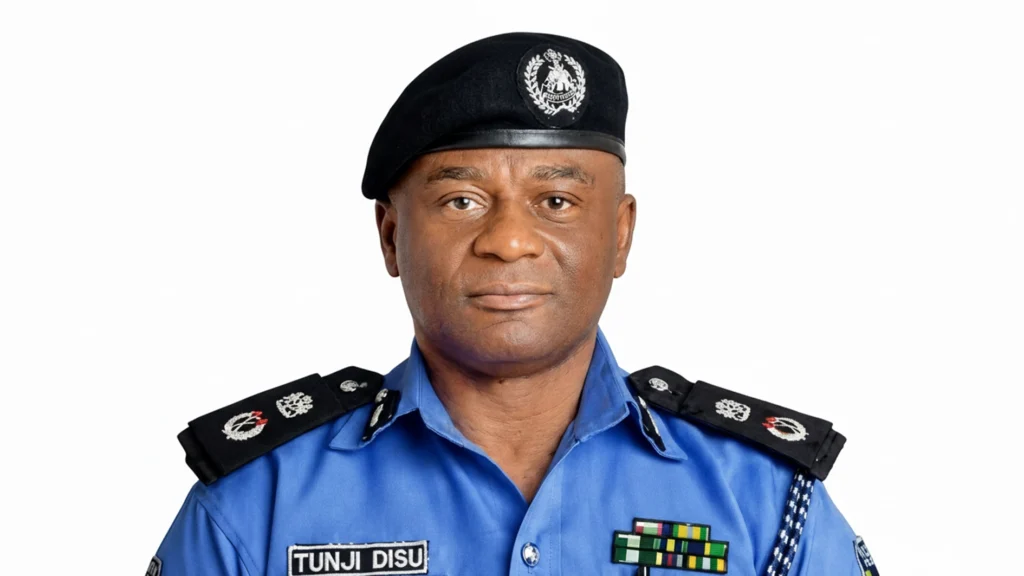
The Nigeria Police Force has clarified that Inspector-General of Police Olatunji Disu did not prohibit Nigerians from recording police officers while they are performing their duties in public.
The clarification was issued by the Force New Media Officer, Aliyu Giwa, following public criticism of comments made by the IGP concerning the filming of police personnel.
Giwa explained that the police leadership’s concern was about the misuse of recordings, particularly when encounters with officers are deliberately turned into entertainment or social media content.
According to Giwa, Disu’s position was not intended to shield police officers from scrutiny or prevent citizens from exercising their rights.
He said there was a need to distinguish between legitimate documentation of police activities and recordings made primarily to provoke, ridicule or exploit officers for online content.
The police spokesman maintained that responsible recording could contribute positively to accountability and transparency.
Giwa said recordings could provide important evidence when an officer is accused of misconduct.
He added that footage could also protect police personnel against false allegations and assist investigators in establishing what actually happened during an encounter.
However, he stressed that being in uniform does not remove an officer’s right to dignity and privacy.
The clarification, according to Giwa, was aimed at finding a balance between public accountability and professional policing.
The debate intensified after an X user suggested that the police should provide officers with body cameras if the Force objected to members of the public recording them.
Responding to the comment, Giwa said body cameras were already part of discussions around modern policing.
He explained that the technology could offer protection to both police officers and members of the public while providing an independent record of encounters.
The controversy followed comments by Disu during a recent courtesy visit by the leadership of the Nigerian Bar Association (NBA) to the Force Headquarters in Abuja.
The IGP had described the use of police officers as material for social media skits as highly demoralising to personnel.
Disu, however, acknowledged that citizens had the right to record police officers carrying out their duties in public.
His position was that such rights should be exercised responsibly and should not be used to turn police encounters into entertainment.
The IGP’s comments triggered reactions from lawyers, human rights advocates and other Nigerians who argued that citizens should be able to document the activities of public officers while they are working in public spaces.
NBA President Oyinkansola Badejo-Okusanya also stressed the need to distinguish legitimate recording of police activities from unnecessary intrusion into officers’ private lives.
The debate also came against the backdrop of a March 17 judgment by the Federal High Court in Warri, Delta State, which affirmed the right of Nigerians to record police officers while they are performing their duties in public.
Giwa said the engagement between Disu and the NBA leadership demonstrated that institutions could hold different views while still resolving disagreements through constructive dialogue.
He argued that the issue should not be presented as a confrontation between the police and citizens or as a dispute between the IGP and the NBA.
Instead, he said the discussion should focus on balancing accountability with responsibility, transparency with privacy, and citizens’ rights with professional police duties.
READ MORE: NAPTIP Urges Ogun Border Communities To Help Stop Human Trafficking
Giwa called on Nigerians to approach the issue without insults or unnecessary confrontation.
He said both citizens and the police ultimately have a shared interest in building a professional police institution and creating a safer Nigeria.
According to him, cameras and other digital tools should not be viewed as threats. Rather, they should be used responsibly to promote truth, accountability and professionalism.
The Force New Media Officer maintained that legitimate scrutiny should not weaken the police institution, just as police institutions should not fear lawful public oversight.