
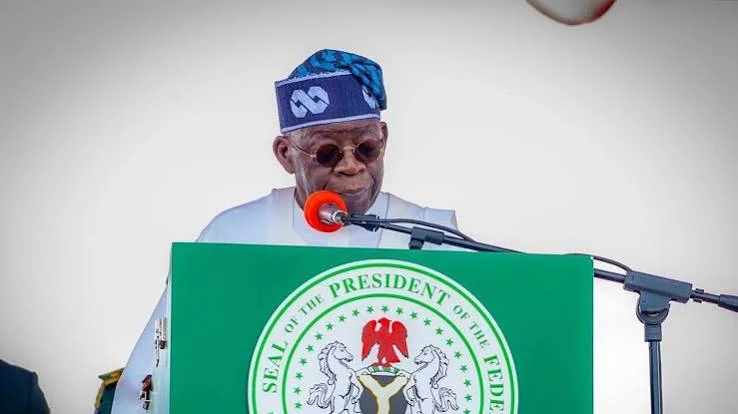
President Bola Tinubu has declared that Nigeria has moved beyond the most difficult phase of his administration’s economic reforms, saying the country is now entering what he described as an “age of prosperity.”
Tinubu made the declaration in his Independence Day address on Thursday as Nigeria marked its 66th anniversary. The address was themed “From Reform to Prosperity.”
The President said the central economic task of his administration had shifted from correcting the country’s economic direction to delivering what he called “shared and widespread prosperity.”
“The emergency treatment is over. The foundation has been repaired,” Tinubu said.
He said the government would now place greater emphasis on jobs, enterprise, industrial growth, lower production costs and improved living standards.
Tinubu Defends Fuel Subsidy Removal
The President used the address to defend the removal of petrol subsidy and the unification of the naira exchange rate, describing the reforms as difficult measures required to address longstanding economic problems.
Using the analogy of a cancer patient, Tinubu said previous governments had postponed difficult decisions while relying on measures that eased the immediate pain without addressing underlying economic weaknesses.
“Our reforms did not create the weaknesses in our economy. They confronted them,” he said.
Tinubu also warned against calls to return to fuel subsidy as the 2027 general election approaches.
Without naming individual opposition politicians, he criticised what he described as efforts to reverse the reforms and urged Nigerians to remember why the policies were introduced.
President Highlights Economic Indicators
Tinubu said Nigeria’s economy had grown by more than four per cent in 2026, with both the oil and non-oil sectors contributing to what he described as a period of stable growth.
He also cited reduced oil theft, lower inflation from its peak, rebuilt foreign reserves and greater stability in the foreign exchange market as signs of improvement.
The President said Nigeria recorded more than $6 billion in non-oil export revenue in 2025, which he described as the country’s highest-ever figure.
He further said foreign direct investment continued to rise and that international observers and multilateral institutions had recognised improvements in Nigeria’s economic stability and resilience. These statements were part of the President’s assessment of his administration’s reforms.
Cost Of Living Remains A Priority
Tinubu acknowledged that millions of Nigerians continue to face difficulties with food, transportation, education and healthcare costs.
He said the government’s next phase would focus on reducing the cost of producing and moving goods rather than relying solely on measures aimed at supporting household consumption.
The President listed plans to expand mechanised irrigation and dry-season farming, improve access to seeds and fertiliser, increase agricultural mechanisation and invest in storage and transportation.
He also pointed to ongoing investments in roads, railways and ports to improve connections between farms, factories and markets.
“When a farmer produces more cheaply, when fewer crops are lost between the farm and the market, when a manufacturer spends less on electricity, when a truck reaches its destination faster, and when the business environment fosters fair competition, all those savings will ultimately find their way into the price of goods in the market.”
Tinubu Promises More Jobs And Industrial Growth
The President said “jobs, enterprise, and industrial growth” would be at the centre of government policy during the next phase of his administration.
He pledged to use Nigeria’s gas resources to support new industries, help revive factories in industrial centres and expand digital connectivity to underserved communities.
Tinubu also said the government would invest in skills required by employers and support businesses with infrastructure and financing.
“I want to see more Nigerians making things,” he said.
He added that he wanted Nigerian farms to supply cities and factories, Nigerian businesses to sell products globally and young Nigerians to build technology companies and create employment opportunities.
Government Plans More Support For Poor Households
Tinubu acknowledged that many Nigerians remain unable to wait for the longer-term benefits of economic growth.
He said the government was strengthening direct support for poor households and improving the National Social Register to ensure assistance reaches people who need it.
The President also cited the Nigerian Education Loan Fund as a mechanism for helping students from low-income families access higher education.
He mentioned CREDICORP, which provides consumer credit for working Nigerians seeking to acquire assets such as vehicles, solar systems and digital devices.
Tinubu also said salaries and pensions had been paid on time and in full since 2023, while the national pension programme had been reformed to support retirees and vulnerable Nigerians.
President Says Nigeria Must Move Beyond Poverty
Tinubu said social welfare programmes should serve as a bridge towards broader prosperity rather than become substitutes for economic growth.
“Our objective is not to manage poverty more efficiently. We will defeat it,” he said.
He acknowledged that reducing poverty would require sustained economic growth, discipline and the creation of millions of productive opportunities.
The President said the government would continue strengthening primary healthcare, basic education and other essential public services while pursuing policies aimed at increasing productivity.
READ MORE: 2027 Election: Tinubu, Atiku, Obi, Sowore And Others’ Key Promises
Tinubu ended his Independence Day speech with a biblical reference, comparing Nigeria’s economic journey to the Israelites’ exodus from Egypt.
“Nigeria has corrected its course. We have passed through our own Red Sea. This is not the time to look back.”
He urged Nigerians to continue moving forward and said the country’s destination was a nation where prosperity would be broadly shared and children could aspire beyond the circumstances of their birth.
“The age of reform has done its work. Now begins the age of prosperity.”
The President’s address comes amid continued public concern over the cost of living and political debate ahead of the 2027 general election, with fuel subsidy policy remaining a major point of disagreement among presidential candidates