
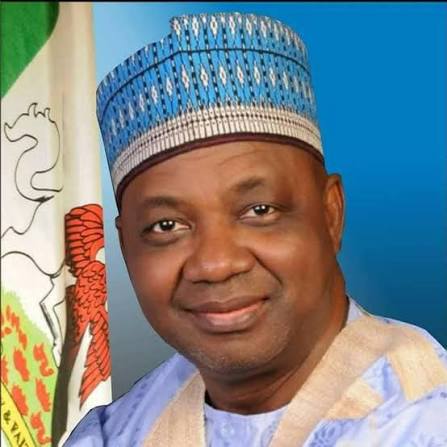
A chieftain of the Peoples Democratic Party (PDP), Umar Sani, has expressed optimism that Nigeria’s main opposition party will emerge stronger from its ongoing leadership crisis, insisting that the legal battles currently before the courts do not signal the end of the party.
Speaking during an interview on ARISE NEWS on Tuesday, Sani described the internal disagreements within the PDP as “family matters” that are being addressed through the judicial process. He maintained that the party’s rebuilding would begin once the courts deliver final interpretations of the disputed judgments.
According to him, the PDP Board of Trustees (BoT) approached the courts after formally writing to the Independent National Electoral Commission (INEC), requesting the recognition of the Kabir Tanimu Turaki-led faction based on what it considers existing judgments of the Court of Appeal and the Supreme Court.
Sani explained that the matter before the Federal High Court is not an attempt to reopen previously decided cases but rather a request for judicial interpretation of existing rulings and directives to INEC on how they should be implemented.
He argued that the case is focused solely on clarifying the meaning of earlier court judgments, stressing that it should not be viewed as an internal party dispute.
The PDP stalwart also criticised the Federal High Court’s handling of the matter, saying the judge misunderstood the nature of the application before the court. He maintained that the party only sought an interpretation of previous appellate judgments and a directive compelling INEC to recognise the Turaki-led faction if the court agreed with its position.
Addressing concerns over the Supreme Court judgment that nullified the Ibadan convention organised by the Turaki-led faction, Sani argued that the ruling also had implications for the opposing faction within the party.
According to him, the Supreme Court’s decision effectively questioned the authority of individuals acting on behalf of both factions. He further stated that the Court of Appeal had also raised issues regarding the legitimacy of another convention, noting that questions remained over where the election was held, how it was conducted, and who participated in the process.
Sani said the PDP complied with the court’s directives by constituting an interim National Working Committee (NWC) and formally notifying INEC within the legal timeframe.
Despite growing concerns over the party’s future and its participation in the 2027 general election, Sani expressed confidence that the PDP would remain on the ballot.
He said the rebuilding process would commence once the legal disputes are resolved, regardless of the eventual outcome, adding that many party members believe the currently recognised leadership does not reflect the vision of the PDP’s founding members.
Describing the PDP as Nigeria’s only surviving legacy political party, Sani insisted that members remain committed to preserving and strengthening the organisation despite its current challenges.
READ MORE: Tinubu Urges United ECOWAS Stand Against Xenophobic Attacks
On questions surrounding the party’s presidential candidate, he dismissed suggestions that the absence of a formal public acceptance amounted to a rejection.
Sani argued that the candidate had never denied being the party’s flag bearer, adding that, in his interpretation, silence should not automatically be construed as refusal.
He reiterated that the Board of Trustees is asking the Federal High Court to interpret previous judgments and direct INEC to recognise what it believes is the legally valid leadership of the party.
According to Sani, both the PDP and INEC have differing interpretations of the court rulings, making judicial clarification necessary to resolve the dispute and provide certainty ahead of future political activities.