
The death toll from the devastating China storms has risen to at least 15, with hundreds of people injured and tens of thousands forced from their homes as severe weather continues to batter several parts of the country.
According to China’s state news agency Xinhua, powerful thunderstorms, gale-force winds, flooding and tornadoes caused widespread destruction across central and southern China on Monday and Tuesday. President Xi Jinping has ordered authorities to “go all out” in rescue and disaster relief efforts as emergency responders continue searching for missing people.
The latest disaster comes as China experiences another summer of extreme weather, with scientists warning that climate change is making severe storms more frequent and more destructive.
Hubei Suffers Deadly Storms
The central province of Hubei recorded the highest number of casualties after violent thunderstorms and powerful winds swept through several cities.
Authorities confirmed that at least 11 people were killed while 331 others sustained injuries during what meteorologists described as an episode of “severe convective weather.”
One person remains missing as rescue teams continue search operations.
The storms also caused extensive structural damage. Around 4,800 homes were damaged, while another 22 buildings collapsed completely, leaving many residents displaced.
State media described the weather system as unusually intense, noting that it developed rapidly and produced extremely powerful winds over a short period.
Meteorologists said the sudden nature of the storms made it difficult for residents to prepare, increasing the risk to lives and property.
Flooding Ravages Guangxi
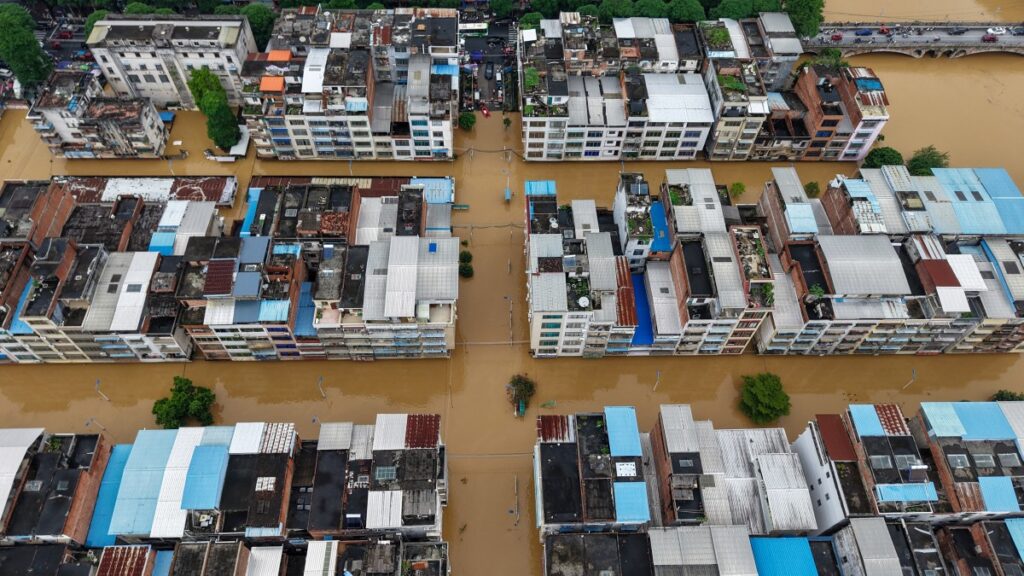
In southern China’s Guangxi region, relentless rainfall linked to Typhoon Maysak triggered severe flooding that has so far claimed at least four lives.
Authorities said approximately 50,000 residents have been evacuated from vulnerable communities as floodwaters continued to rise.
Eight people remain missing.
Emergency officials in Nanning, the regional capital, raised the flood control emergency response to its highest level after torrential rainfall caused reservoir dams to fail.
Footage broadcast by state broadcaster CCTV showed muddy floodwaters surging through a breached reservoir, carrying debris as sections of concrete walls collapsed under the force of the water.
Flood rescue teams have been deployed across affected communities, using inflatable boats and emergency equipment to reach stranded residents.
Xi Jinping Calls for “All-Out” Rescue Efforts
President Xi Jinping on Tuesday instructed emergency agencies to spare no effort in rescuing those affected by the disasters.
According to CCTV, Xi urged authorities to organise rescue operations without delay while ensuring injured victims receive medical treatment.
He also emphasised the need to safely relocate displaced residents and strengthen disaster prevention measures to reduce further risks.
State television showed rescue personnel wearing life jackets and helmets conducting searches in flooded communities, while additional emergency workers continued relief operations in severely affected areas.
Authorities remain on high alert as heavy rain and unstable weather conditions persist across several provinces.
Landslide Traps Residents in Gansu
In a separate incident on Tuesday morning, a landslide struck a village in the northwestern province of Gansu, burying 33 people beneath mud and debris.
Chinese state media reported that 17 people had been rescued alive.
Search and rescue teams are continuing efforts to locate those still trapped.
Officials said local authorities are working to relocate affected residents while monitoring the area for secondary disasters, including additional landslides caused by unstable ground conditions.
The cause of the landslide has not yet been officially confirmed.
READ ALSO: Pakistan Airstrikes in Eastern Afghanistan Kill Dozens
China Faces Increasing Extreme Weather
China frequently experiences severe weather during the summer months, with some regions enduring intense rainfall and flooding while others face prolonged heatwaves and drought.
The country has invested heavily in improving disaster response systems and weather forecasting, but increasingly intense weather events continue to test infrastructure and emergency preparedness.
Climate scientists have repeatedly warned that rising global temperatures are increasing both the frequency and intensity of extreme weather events worldwide.
Warmer atmospheric conditions allow storms to hold more moisture, often resulting in heavier rainfall, stronger winds and more destructive flooding.
China remains the world’s largest emitter of greenhouse gases due to its vast industrial economy. At the same time, it is also the world’s leading investor in renewable energy and has pledged to achieve carbon neutrality by 2060.
The latest disasters follow another deadly spell of heavy rainfall in May, when at least 22 people were killed across central and southern China. State media described some areas as experiencing record-breaking rainfall during that event.
As rescue operations continue across multiple provinces, authorities are urging residents in high-risk areas to remain alert, follow evacuation orders and monitor official weather advisories for further developments.
AFP