



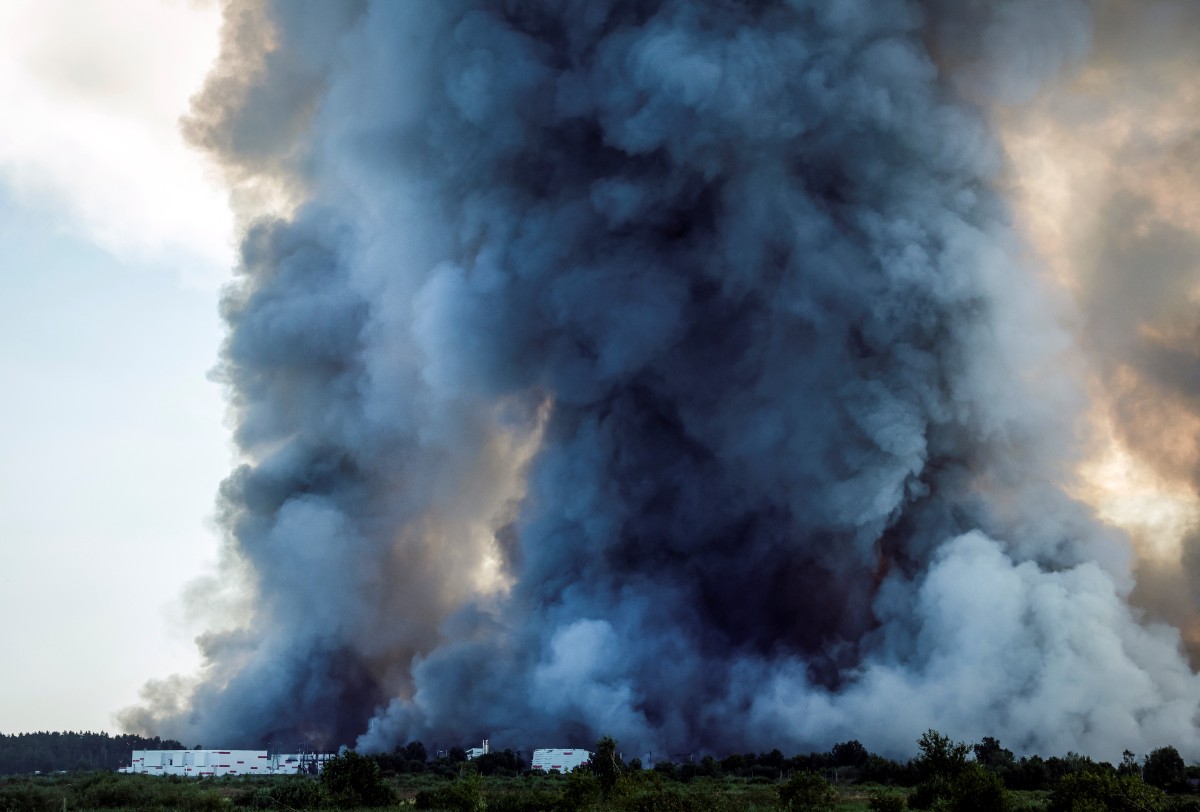
Ukraine launched one of its largest drone attacks on Russia’s Moscow region overnight, wounding at least 10 people, including a child, and damaging residential properties, according to Russian authorities, as cross-border attacks between the two countries continue to intensify.
Russian officials said air defence systems intercepted hundreds of Ukrainian drones targeting areas around the capital, underscoring the growing reach of Kyiv’s long-range strike campaign more than four years into the war.
The latest attack came just a day after Russia launched a ballistic missile strike on Ukraine’s capital, Kyiv, killing one person and injuring at least 16 others, highlighting the continuing cycle of retaliatory attacks between the two countries.
Moscow Region Governor Andrei Vorobyov said the overnight drone assault left 10 people injured, among them a child.
He added that three of the injured were Chinese nationals.
According to Vorobyov, several private homes in Podolsk, south of Moscow, sustained damage during the attack.
The towns of Domodedovo, home to one of Moscow’s major international airports, and Odintsovo were also affected.
One individual was reportedly injured after drone debris landed near a vehicle travelling on a motorway.
Emergency services were deployed to affected areas to assess damage and assist residents.
Russian officials said the scale of the attack was significant.
Moscow Mayor Sergei Sobyanin said air defence units destroyed 85 drones as they approached the Russian capital.
Authorities also reported that nearly 400 drones were intercepted across the wider Moscow region, reflecting the increasing frequency and sophistication of Ukrainian drone operations.
While Russia did not specify how many drones ultimately reached their intended targets, the attacks caused fires and disruption in several communities.
Drone strikes on the Moscow region have become increasingly common over the past year as Ukraine expands its long-range capabilities.
Kyiv has steadily increased attacks deep inside Russian territory, targeting military infrastructure, logistics hubs, fuel depots and industrial facilities.
Ukrainian officials have repeatedly said such operations are aimed at weakening Russia’s military capabilities and demonstrating that the war can also affect areas far from the front lines.
Recent Ukrainian strikes have reached locations as distant as the Ural Mountains and Siberia, reflecting the growing range of domestically developed drone technology.
Over the weekend, Ukrainian attacks on e-commerce warehouse facilities outside Moscow reportedly killed eight people, according to Russian authorities.
Kyiv has not publicly commented on many of the reported strikes.
The latest drone offensive followed another Russian missile attack on Kyiv.
Ukrainian authorities said a Russian ballistic missile strike on Sunday killed one civilian and injured 16 others in the capital.
Kyiv has endured repeated missile and drone attacks throughout the summer, with June recording the highest monthly civilian casualty figures in Ukraine since Russia launched its full-scale invasion in February 2022.
Russian forces have continued targeting Ukrainian cities with missiles, drones and glide bombs, while Ukrainian forces increasingly rely on long-range drone strikes to hit targets inside Russia.
The conflict has evolved into a prolonged war of attrition, with both sides employing increasingly advanced aerial weapons.
Despite periodic diplomatic efforts, negotiations aimed at ending the conflict remain stalled.
Ukraine maintains that attacks on Russian territory are intended to reduce Moscow’s capacity to wage war and increase pressure on the Kremlin to engage in meaningful peace negotiations.
Russia, meanwhile, has shown little indication of softening its military objectives.
Moscow continues to insist on demands that include control over all of eastern Ukraine, conditions Kyiv has repeatedly rejected as unacceptable.
With neither side showing signs of backing down, the conflict has continued to expand beyond the battlefield, exposing civilians in both countries to increasing risks from missile and drone attacks.
The latest exchanges illustrate how the war has increasingly reached population centres far from the front lines.
Moscow and the surrounding region, once largely insulated from the fighting, have become frequent targets of Ukrainian drone operations, while Russian missile and drone strikes continue to inflict casualties across Ukraine.
As both countries intensify aerial attacks, concerns remain high that the conflict could further escalate, with continued impacts on civilian infrastructure, transportation networks and regional security.
More than four years after Russia launched its full-scale invasion, the prospect of a negotiated settlement remains uncertain as military operations continue on both sides.
AFP